
Executive Summary
In the contemporary digital ecosystem, consumer valuation metrics have fundamentally transitioned from transactional speed to operational predictability. While the preceding decade was defined by an infrastructural race toward expedited fulfillment (e.g., same-day or next-day delivery), the modern fulfillment landscape is governed by a different mandate: the eradication of last-mile anxiety.
This report analyzes the systemic shifts driving this evolution, the hidden operational liabilities of fragmented tracking, and why reliability has emerged as the primary driver of customer lifetime value (CLV) and brand equity.
The Devaluation of Velocity: Redefining Modern Convenience

For years, logistics strategies prioritized velocity as the ultimate competitive differentiator. However, optimization data reveals a critical inflection point where incremental gains in shipping speed yield diminishing returns if they introduce unpredictability. (source)
Modern consumer behavior indicates a higher tolerance for extended, well-communicated lead times than for narrow, volatile fulfillment windows. This behavioral shift redefines the core concept of logistics convenience:
Convenience is no longer defined by the velocity of the transit; it is quantified by the certainty of the arrival.
When post-checkout visibility collapses into an informational vacuum, characterized by stale tracking data or unnotified delivery delays, it introduces cognitive friction. The consumer’s primary psychological driver shifts from anticipation to anxiety, undermining the perceived value of the product itself.
The Microeconomic Cascades of Friction: The True Cost of Failure
An unfulfilled or volatile delivery window is rarely an isolated logistics failure; it serves as a catalyst for compounding operational and capital inefficiencies across an enterprise.
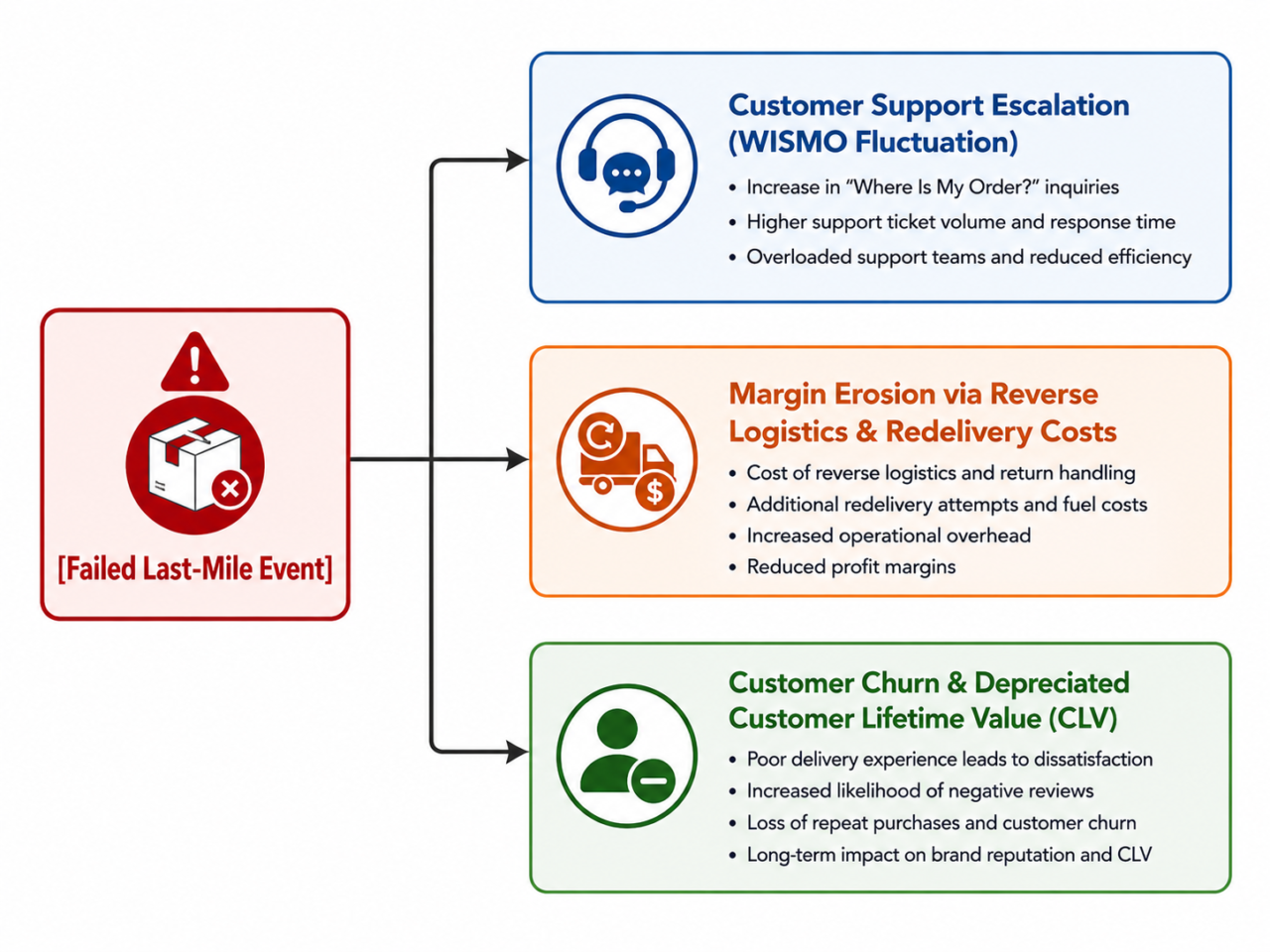
The true cost of unreliable delivery operations can be mapped across three organizational layers:
I. Customer Support Inflation
Unreliable tracking triggers immediate spikes in WISMO (Where Is My Order?) inquiries. This shifts customer experience (CX) teams from proactive relationship management to reactive crisis mitigation, significantly increasing the cost-to-serve per order.
II. Revenue Deflection and Margin Erosion
Failed delivery attempts, unauthorized returns, and processing disputes create severe inefficiencies in reverse logistics. The capital required to remedy a single failed delivery frequently consumes the profit margin of multiple successful transactions.
III. Attribution Bias and Brand Degradation
Consumers exhibit a strong attribution bias regarding third-party courier performance. Even when fulfillment failures occur downstream within a decoupled carrier network, the consumer psychologically attributes the negative experience directly to the primary merchant brand.
Comparative Analysis: Velocity Metrics vs. Predictability Architecture

To understand the long-term commercial impacts of logistics strategies, enterprises must weigh the short-term benefits of raw speed against the compounding returns of structural reliability.
| Metric Dimension | The Velocity-First Framework (Speed Focus) | The Predictability-First Framework (Reliability Focus) |
| Primary Core Value | Short-term customer acquisition and immediate gratification. | Long-term customer retention and brand equity. |
| Fulfillment Experience | High anticipation paired with volatile tracking variance. | Low friction supported by milestone transparency. |
| Operational Impact | Reactive support structures dealing with erratic failures. | Proactive, exception-based logistics management. |
| Risk Profile | Elevated churn due to unmet delivery expectations. | Mitigated risk via proactive communication protocols. |
| Commercial ROI | Linear returns tied directly to promotional spend. | Compounding returns driven by repeat purchase behavior. |
Architectural Benchmarks of a High-Performance Logistics Partner
To transition from a cost-center model to a value-generating asset, businesses must evaluate logistics partners against sophisticated operational benchmarks rather than simple flat-rate shipping costs.
A resilient supply chain requires an integrated network capable of delivering six core operational pillars:
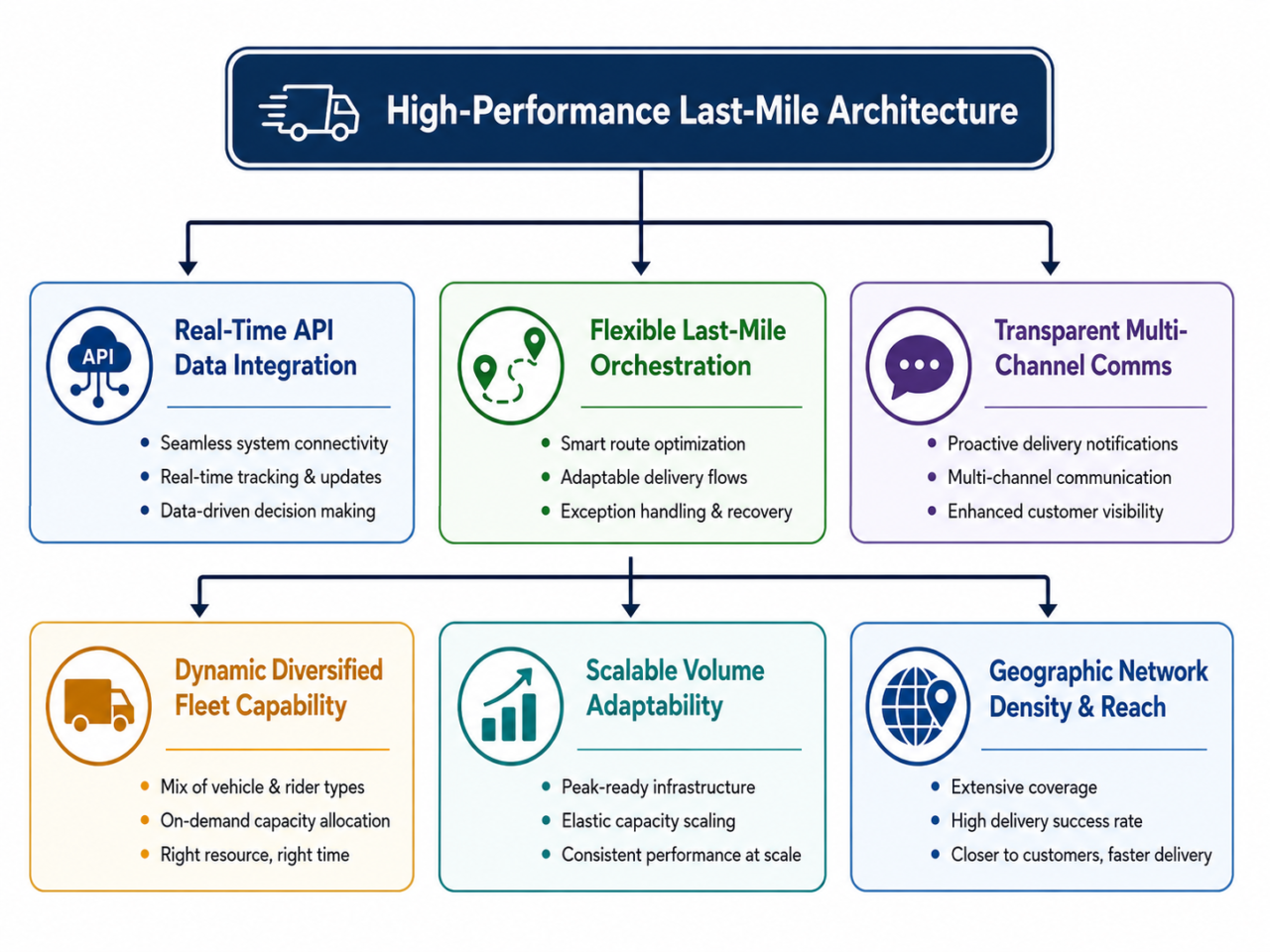
- Real-Time API Data Integration: The elimination of batch-processed tracking updates in favor of live, event-driven status streaming.
- Flexible Last-Mile Orchestration: Dynamic rerouting capabilities and customizable delivery protocols based on real-time consumer inputs.
- Transparent Multi-Channel Communication: Proactive automated notifications delivered through integrated, accessible communication channels.
- Dynamic Diversified Fleet Capability: The infrastructure required to seamlessly navigate complex urban centers and specialized cold chain requirements without systemic bottlenecks.
- Scalable Volume Adaptability: The capacity to absorb seasonal demand spikes (e.g., peak e-commerce periods) without experiencing degraded service levels.
- Geographic Network Density: Deep regional coverage that ensures the same baseline of tracking precision and reliability across both urban centers and secondary markets.
Enterprise solutions, such as Ninja Van’s Last-Mile Parcel Delivery, exemplify this structural shift. By embedding high-density logistics networks with granular data transparency, they allow merchants to scale their operations safely, ensuring that increased transaction volume does not come at the cost of the customer experience.
Strategic Conclusion: Trust as a Competitive Moat

As acquisition costs (CAC) continue to climb across digital channels, retention economics dictate that the post-purchase journey is the true battleground for sustainable profitability.
In this market environment, reliability serves as an invisible yet powerful customer retention mechanism. By transforming the final touchpoint from an unpredictable logistical variable into a predictable, premium brand interaction, enterprises don’t just protect their margins; they build a defensible competitive advantage rooted in consumer peace of mind.
“In the modern supply chain, predictability has superseded speed as the definitive metric of delivery excellence. Enterprises that optimize for transparency and consistency over raw velocity insulate themselves against customer churn, optimize operational expenditures, and establish last-mile logistics as a core driver of brand equity.” – Ninja Van Malaysia