

Cross-border trucking is often chosen for Malaysia–Singapore shipments because it sits between air and sea in terms of speed and cost. Yet many businesses still struggle to predict what trucking will actually cost, even when shipping the same products repeatedly.
The reason is simple. Trucking is not priced like parcels. Once freight consolidates into pallets, cost is driven by how space is used and whether shipments move as LTL (by pallet) or FTL (by truck).
If you are planning regular restocks or palletised shipments into Singapore, understanding this difference is the key to keeping logistics spend under control.
What Is a Pallet in Cross-Border Trucking?
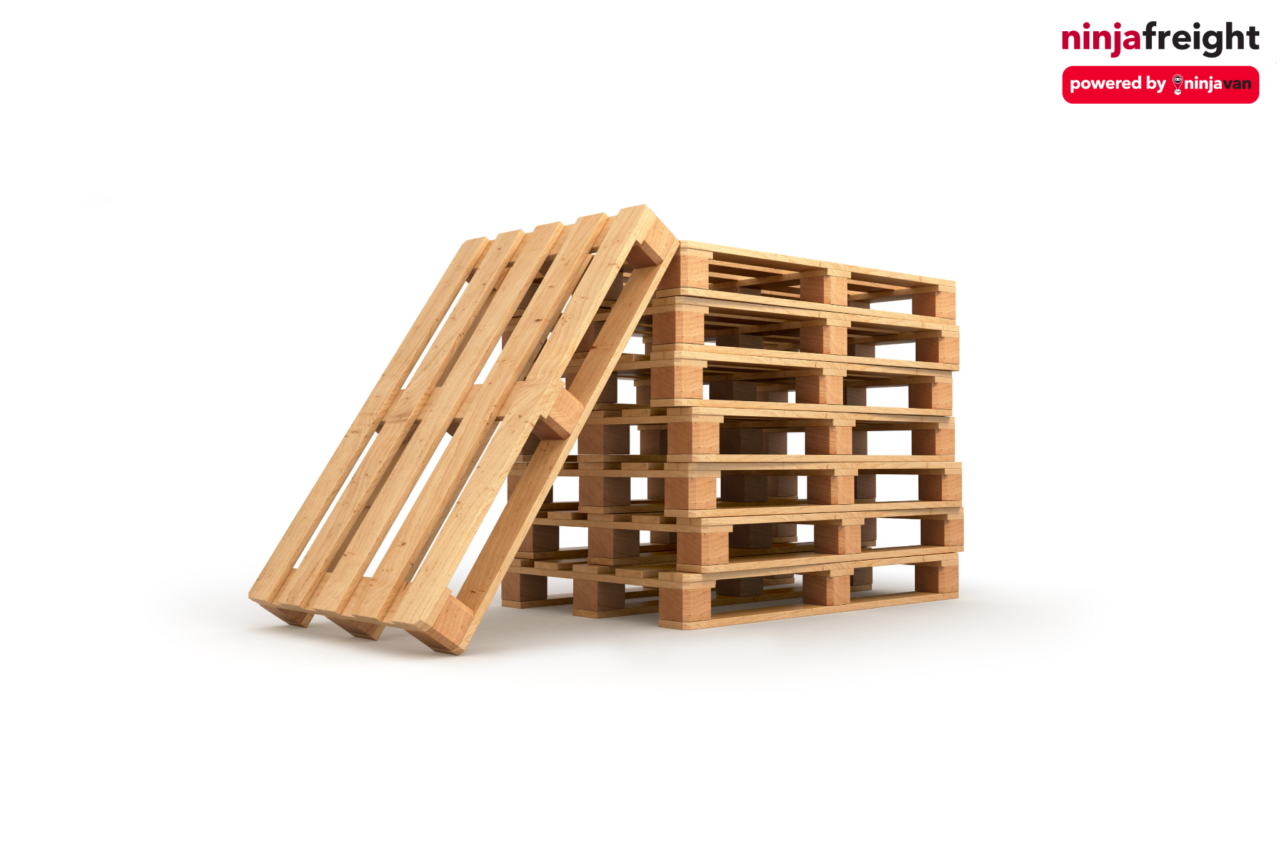
In B2B cross-border trucking, freight is planned and priced by pallet, not by individual cartons. In practice, many providers treat one pallet as the minimum unit.
As a simple reference, one pallet usually holds 40 to 60 cartons and often starts from around 300 kg, depending on how the cartons are stacked. Once shipments are consolidated this way, trucking costs become far more predictable because space and handling are standardised.
LTL vs FTL Trucking from Malaysia to Singapore
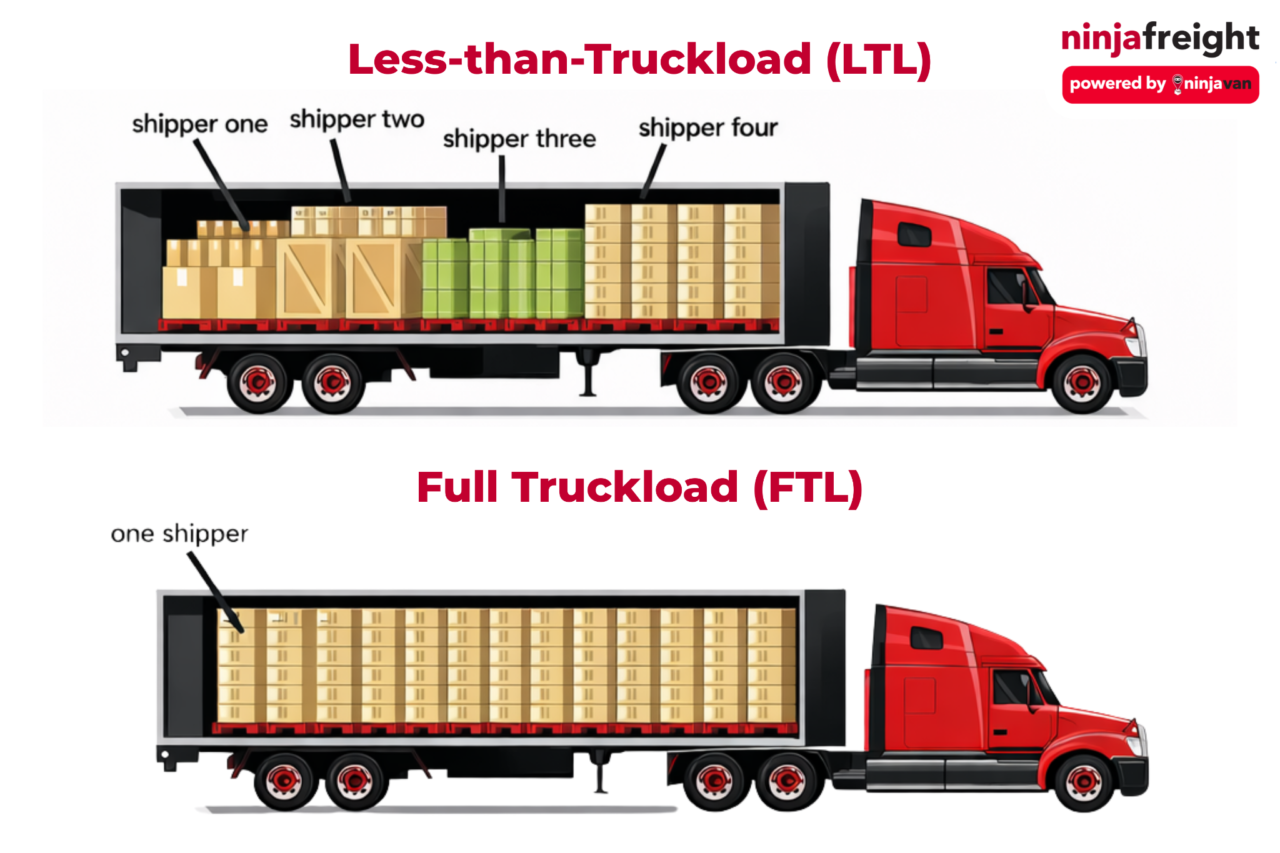
The visual above shows the core difference between LTL (Less-than-Truckload) and FTL (Full Truckload) trucking. Both move freight on the same cross-border lane, but they are priced and planned very differently.
In Malaysia–Singapore trucking, this distinction matters because costs are driven by how much truck space you need, not just how heavy your cargo is.
With LTL, you are effectively buying pallet space. Your pallets move together with other shippers’ cargo, which makes LTL practical when you have palletised freight but not enough volume to fill a truck on your own. This allows businesses to ship regularly without waiting to accumulate full-truck quantities.
With FTL, you are buying the entire truck. This usually becomes more cost-efficient per unit once shipment volume is high enough, and it also reduces handling touchpoints because the cargo moves as a single, dedicated load.
In simple terms:
- LTL prioritises flexibility and cost-sharing
- FTL prioritises volume efficiency and control
For most B2B shippers, the decision is less about speed and more about how consistently they can fill space. One to a few pallets usually point toward LTL, while frequent high-volume movements tend to justify FTL.
What Affects Cross-Border Trucking Costs from Malaysia to Singapore?
Once freight is palletised, trucking costs are generally more predictable than parcel shipping. Even so, quotes can still vary based on how efficiently cargo moves through the network.
1. Pallet space and build quality
One of the biggest cost drivers is how your pallets use space. Two shipments with the same weight can be priced differently if one pallet is compact and stackable while the other is bulky or unstable. In practice, trucking is priced around space and handling, not just kilograms.
2. Shipping consistency and volume planning
How regularly you ship also matters. Businesses that restock Singapore on a consistent cadence tend to benefit from smoother planning and consolidation, while ad-hoc shipments often introduce inefficiencies that show up in cost.
3. Pickup and delivery conditions
Where and how your shipment is collected and delivered can influence pricing. Freight moving from major hubs typically consolidates more smoothly than out-of-zone pickups, while delivery requirements such as tight time windows or restricted access locations can add complexity.
4. Border readiness and documentation
Finally, documentation quality affects cost predictability. Clean invoices, accurate HS codes, and the correct permits help avoid delays and reprocessing, which often surface as indirect costs or timeline risk rather than clear line items.
What You Need for an Accurate Malaysia–Singapore Trucking Quote
Once you understand how pallets, LTL, and FTL work, the next step is making sure your quote reflects reality. Most unexpected cost adjustments happen not because rates change, but because shipment details were incomplete or unclear at the quoting stage.
To get an accurate trucking quote, providers typically need a clear view of where the cargo is moving, how much space it takes, and what the goods are.
At a minimum, prepare:
- Pickup and delivery addresses, including postcodes
- Number of pallets, with estimated dimensions and total weight
- Carton count per pallet, if available
- A clear description of the goods, including HS codes
- Any permits or licences required for controlled items
The more complete this information is upfront, the more stable your final cost will be. It also helps providers plan consolidation, border clearance, and delivery more efficiently, reducing the risk of delays or reprocessing.
Looking for Malaysia–Singapore Cross-Border Trucking?
If you are planning regular palletised shipments from Malaysia to Singapore, cost clarity starts with choosing the right structure, whether that means LTL by pallet or a full truckload.
Ninja Freight supports businesses in reviewing trucking costs and preparing accurate quotes across the Malaysia to Singapore corridor — our strongest and most mature lane. As a result, we are able to deliver consistently cost-effective trucking solutions.
Contact Ninja Freight today.